
In brief
- Sound systems began in Kingston in the late 1930s as cheap entertainment, playing American R&B records at house parties.
- In the 1950s operators such as Clement "Sir Coxsone" Dodd and Duke Reid made them a business. Operators then began making their own records, which led to ska, and in time to reggae, dub and dancehall.
- The dance gave Patois many everyday words, including riddim, selecta, deejay, dubplate, rewind and sound clash.
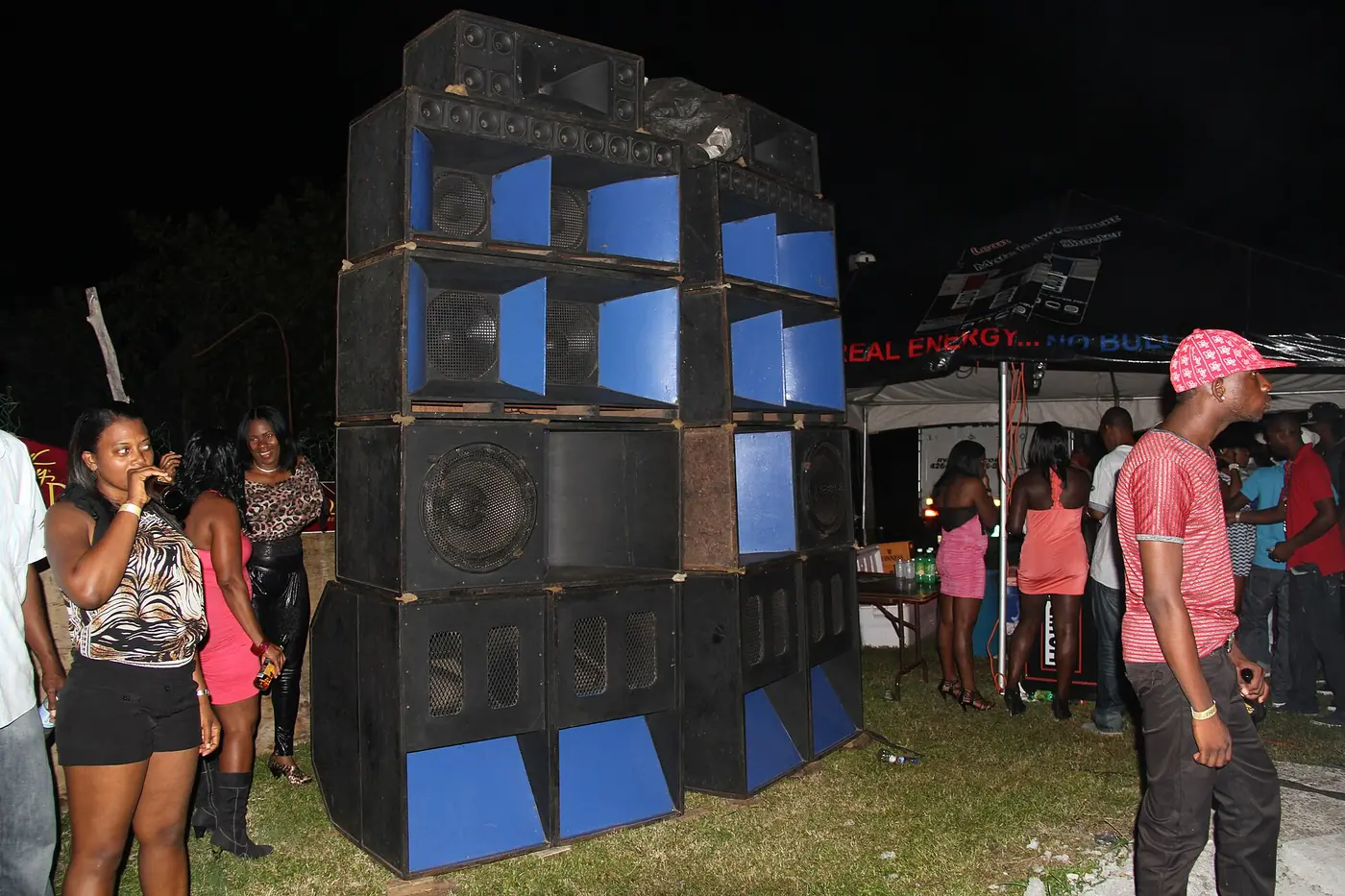
A Jamaican sound system is a mobile set of speakers, amplifiers and turntables, and the crew that runs it. It brings recorded music to a yard, a street or a dance, and it has a name that people follow. Much of Jamaica’s music, and a good share of its slang, came out of these dances.
How the sound system started
The African Caribbean Institute of Jamaica, part of the Institute of Jamaica, traces sound systems in Kingston to the late 1930s1. They were an affordable form of entertainment for the city’s lower-income residents. Early operators such as Count Nick and Count Goody played American R&B records at house parties, and the parties grew into large dances1.
By the 1950s, Clement “Sir Coxsone” Dodd and Duke Reid had turned the sound system into a professional business that supported local music production1.
From records to Jamaican music
When American R&B moved towards rock and roll, Jamaican operators began producing their own records. The result was ska, in the early 1960s, which mixed mento rhythms with American jazz and R&B1. Reggae followed in the late 1960s, building on ska and rocksteady with a slower rhythm1.
Studio engineers such as King Tubby then stripped reggae tracks back and remixed them, which became dub1. Dancehall, named after the outdoor venues where sound systems held their parties, came in the late 1970s and grew through the 1980s. King Jammy’s digital production changed its sound1.
UNESCO added reggae music of Jamaica to its list of the intangible cultural heritage of humanity in 20182. Its description places the music’s origins in a cultural space that was home to marginalised groups, mainly in Western Kingston2.
The people at the dance
The selecta chooses and plays the records, reading the crowd. The deejay is the voice on the microphone. This catches out visitors, because elsewhere a DJ plays the records. In Jamaica the deejay chats or sings rhythmically over the music, a style called toasting1.
A good selecta also knows juggling: blending one tune into the next so the dance never drops. A dance that runs through the night is a session, and a big, lively one is a bashment.
The music words
A riddim is the backing track, the Jamaican way of saying rhythm, and one popular riddim can carry songs by dozens of artists. The version was the instrumental cut, once the B-side of a single. It gave deejays something to toast over and engineers something to remix, and the remix style that grew from it, heavy on drum, bass and echo, is dub.
A dubplate is a one-off recording made for one sound system, often with the sound’s name sung into the lyrics. And a big tune is the hit everybody wants to hear.
Words from the crowd
When a tune lands, the crowd calls for a rewind or a pull-up: the selecta stops the record and runs it back from the top. Gunshot sounds like booyaka are shouted as a salute to the tune, a sign of approval. A performer who mashes up the place has given a show so strong the crowd goes wild.
A sound clash is a battle between rival sound systems. Each plays its best tunes and dubplates, and the crowd decides who wins.
Hearing it today
These words turn up wherever the music goes, in lyrics, on the radio and in everyday talk. You can find every one in the music, reggae and dancehall category, test yourself with the dancehall slang quiz, or look up the dance moves in dance, party and celebration.
Timeline
- Late 1930s Sound systems appear in Kingston as cheap entertainment, playing American R&B at house parties 1
- 1950s Coxsone Dodd and Duke Reid turn the sound system into a professional business 1
- Early 1960s Ska takes shape as operators begin making their own records 1
- Late 1960s Reggae emerges, slower than ska and rocksteady 1
- Late 1970s Dancehall emerges, named after the outdoor venues where sound systems played 1
Common questions
-
What is the difference between a selecta and a deejay?
In Jamaica the selecta chooses and plays the records. The deejay is the performer who chats or toasts over the music on the microphone, closer to what other countries call an MC.
-
What is a riddim?
The instrumental backing track of a reggae or dancehall song. One popular riddim is often voiced by many different artists, each with their own song over the same music.
-
What is a dubplate?
An exclusive recording made for one sound system, in which an artist re-sings a hit with the sound's name worked into the lyrics. Sounds play them in a clash to win the crowd.
Sources
- The Evolution of Music in Kingston, Jamaica African Caribbean Institute of Jamaica / Jamaica Memory Bank, Institute of Jamaica
- Reggae music of Jamaica UNESCO Intangible Cultural Heritage