
In brief
- A Jamaican proverb is a short saying in Patois that makes its point with a picture from yard or farm life, like a chicken, a hawk, a donkey or a pot.
- Most give advice about patience, greed, careless talk, danger or helping each other.
- Many were written down over a century ago, and the National Library of Jamaica keeps a list with translations and explanations.
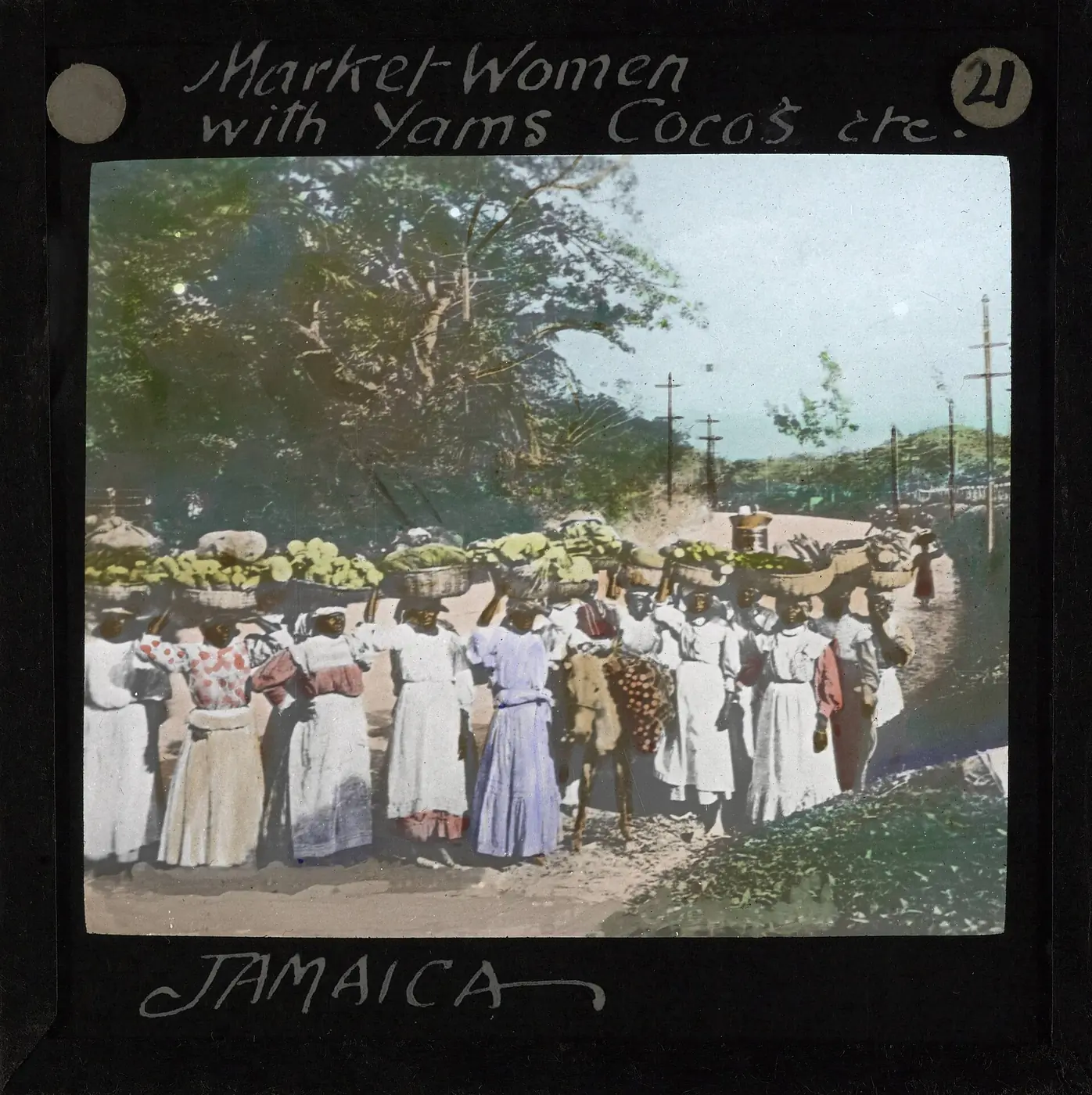
A Jamaican proverb is a short saying in Patois that gives advice through a picture. The pictures come from yard and farm life: chickens and hawks, dogs and donkeys, cocos, plantains and cooking pots. Many people first hear them from a parent or grandparent, said at the moment the advice fits.
The writer of a Vision 2030 Jamaica blog post remembers a grandmother in rural North West Clarendon shouting chicken merry, hawk deh near whenever the children were playing2. The page explains it the way the family meant it: while you enjoy yourself, keep watch for danger2. Many proverbs work that way. They are said out loud, at the right time, and the listener works out the rest.
Patience and hard work
One one coco full basket is about small steps. The basket fills one coco at a time, so small, steady steps get the job done. Likkle axe cut down big tree says the same thing with an axe: keep chopping and the biggest tree comes down.
Patience man ride donkey praises the slow way. The National Library of Jamaica writes it “Payshent man ride danki” and explains that a donkey is slower than a horse but still reaches the end of the journey1. Time longer than rope asks for patience too, and carries a warning for anyone doing wrong: the consequences may be slow, but they come.
Greed and wanting
Craven choke puppy means greed chokes the puppy. Grab too much at once and it brings you down. Wanti wanti cyaan getti, getti getti nuh want it says that people who want a thing badly cannot get it, while people who have it do not value it. The National Library’s explanation turns it into advice: be thankful for what you have1.
The library’s list also has “wen man belly full, im bruck pat”, meaning when a man’s belly is full, he breaks the pot1. Once people are comfortable, they forget what it was like to be in need.
Careless talk and pride
Cock mout kill cock means the rooster’s own mouth kills him. In the National Library’s version, the butcher would never have found the rooster if it had not crowed1. The lesson is to watch what you say and never boast. Fish get ketch by him own mouth makes the same point with a fish on a hook.
Peacock hide him foot is about pride: a proud person does not like small faults pointed out1. Finger never seh look here, it seh look yonder notes that a pointing finger always points away, because people rarely point out their own faults1.
Danger and staying alert
Alongside chicken merry, hawk deh near, there is fire deh a mus-mus tail, him tink a cool breeze. The fire is at the mouse’s tail and the mouse thinks it is a cool breeze: someone is in trouble and has not noticed.
If yuh hand inna devil mout, tek it out easy tells you to act carefully when you are getting out of a difficult spot1. Nuh wait till drum beat before yuh grine yuh axe means do not wait for the drum before you sharpen your axe. Be ready before you are needed1.
Helping each other
One han cyaa clap means one hand cannot clap. Some things cannot be done alone. One finger cyaan ketch louse makes the same point, and the National Library explains its version as a call for cooperation on any job that needs more than one person1. “Wan han wash de oda”, one hand washes the other, means one good turn deserves another1.
Rain neva fall a one man door is a reminder that trouble comes to everyone. The library’s explanation is short: when it rains, it rains on all1.
Three more you will hear
- Play fool fi ketch wise: act foolish to catch out the clever. Pretend you do not know, and the truth comes out.
- Every hoe have him stick a bush: every hoe has a handle waiting in the bush, so there is someone out there for everyone.
- Wha nuh dead, nuh dash weh: do not throw away anything that still has life or use in it.
Where the sayings were written down
People have been collecting Jamaican proverbs in print for more than a hundred years. The National Library of Jamaica’s list gives each proverb in Patois, a translation into standard English and an explanation, and credits several of them to two older collections: one by Martha Warren Beckwith and one by Izett Anderson and Frank Cundall1. Beckwith’s Jamaica Proverbs was published by Vassar College in 19253.
The spelling changes from one collection to the next. The library writes “Payshent man ride danki” where this dictionary uses “Patience man ride donkey”, and both are right. Patois has no single official spelling, so look for the saying by its sound. The proverbs and sayings category of the dictionary lists every one we have written up, and the proverbs quiz tests whether you can read them.
Common questions
-
What does "one one coco full basket" mean?
Little by little, the job gets done. The basket fills one coco at a time, so small, steady steps add up to something big.
-
What does "chicken merry, hawk deh near" mean?
When you are enjoying yourself and not paying attention, danger may be close. It is a warning to have fun but stay alert.
-
What does "play fool fi ketch wise" mean?
Pretend not to know something so that a clever person lets the truth slip. You act foolish to catch out the one who thinks they are wise.
-
Where can I find more Jamaican proverbs?
The proverbs and sayings category of this dictionary lists every saying we have written up, each with its meaning and examples. The National Library of Jamaica also keeps a list online with translations into standard English.
Sources
- Jamaican Proverbs National Library of Jamaica
- A suh granny seh: chicken merry, hawk deh near Vision 2030 Jamaica, Planning Institute of Jamaica
- Online books by Martha Warren Beckwith (1871-1959) The Online Books Page, University of Pennsylvania