
In brief
- A duppy is the spirit of a dead person that is believed to stay in this world, and folk tradition holds that there are good duppies and bad ones.
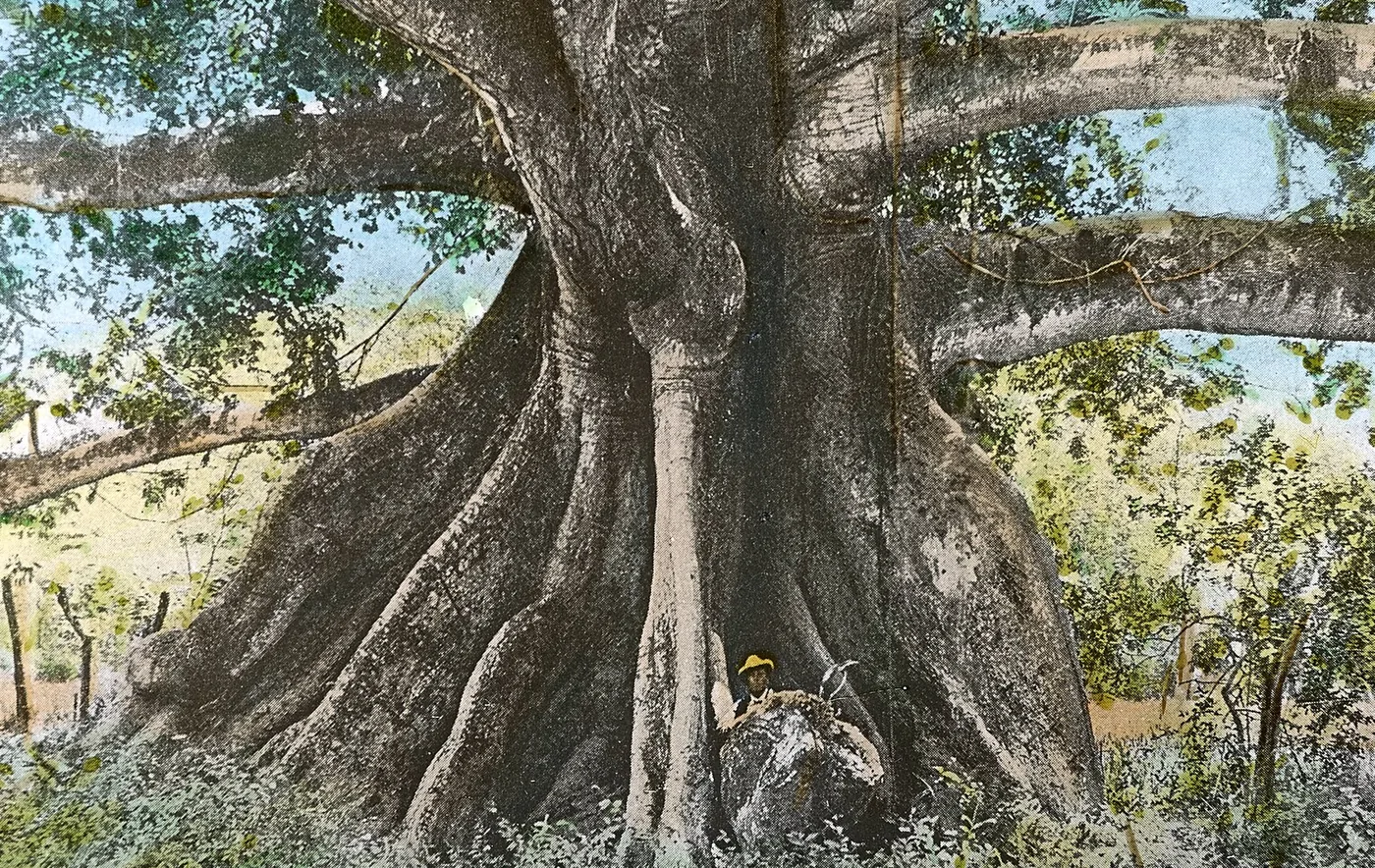
- Duppies are said to live in the roots of cotton trees, in bamboo thickets and in empty buildings.
- Many customs around a death, from covering mirrors to the nine-night, were meant to send the duppy on so it would not trouble the living.
- Duppy beliefs came to Jamaica from Africa and are part of the island's folklore along with Anansi stories and proverbs.
A duppy is a ghost: the spirit of a dead person that is believed to stay in this world after death. The belief came from Africa. The National Library of Jamaica lists duppy lore among the folklore of Jamaica’s African heritage, alongside obeah, proverbs and Anancy stories1. In the African belief behind it, a person has three parts: the body, the spirit, and the shadow, or duppy3.
Duppies are generally believed to be harmful, but tradition holds that there are good duppies as well as bad ones2. A duppy that is not given due respect after death is said to cause havoc for the living3.
What duppies are said to do
In the old stories a duppy can take human or animal form and change from one to the other2. Duppies talk, laugh, sing, cook, smoke and ride horses, using the horse’s tail as a bridle2. They walk in a straight line, which is why people leaving a wake were told to walk backwards and turn around three times2.
They are also said to make themselves felt. A sudden gust of warm air means a duppy is near2, and the duppy wind, a little whirl of wind on a still day, takes its name from the same belief. Moths or birds flying into a sickroom were read as a sign of death3.
Where duppies live
Duppies are said to live in the roots of cotton trees, in bamboo thickets and in abandoned buildings, and to eat bamboo roots, fig leaves and the fruit of a vine called duppy pumpkin2. Plants with “duppy” in the name, such as duppy chocho and duppy coconut, are the ones people do not eat2. Night-blooming jasmine is said to draw duppies in2.
Duppies and the nine-night
Many customs around a death were meant to make sure the duppy left. One belief is that the duppy rises on the third day after the burial, walks around the house among its belongings, and leaves on the ninth night2. The nine-night is the mourning period that ends with food and dancing on that ninth night3. The nightly gatherings before it are called a set-up. Dinki mini, one of the traditional wake dances, was performed from the second to the eighth night1.
The house was changed so the duppy would not feel at home. Mirrors were covered, clocks were stopped, and furniture was moved around so the ghost would not find the place familiar if it came back3. The body was carried out feet first3, and at the grave, the diggers threw dirt backwards between their legs so the dead would not follow them home2.
How to keep a duppy away
Folk tradition has a long list of protections. Burn rosemary and scatter rice to clear the dead person’s ghost from the house2. Leave ten coffee beans in the room of the dead, because a duppy can only count to nine2. If a duppy follows you, stop and mark an X on the ground, and if you have to hit one, use your left hand2. Do not talk loudly at night, or a duppy may hurt you2.
Other spirits and duppy sayings
Jamaican folklore has other spirits with their own entries in the dictionary: the rolling calf, one of the most feared, and River Mumma, the spirit of the rivers. Across the eastern Caribbean, a ghost is more often called a jumbie.
The duppy also lives on in Patois sayings. Duppy know who fi frighten means a ghost knows whom to scare: bullies pick on people they think will not fight back. A duppy conqueror is someone afraid of nothing. More words are on the folklore and superstitions page.
Common questions
-
What is a duppy in Jamaica?
A duppy is a ghost, the spirit of a dead person believed to stay in this world. Folk tradition holds that most are harmful, but that there are good duppies as well as bad ones.
-
Where do duppies live?
Folklore says duppies live in the roots of cotton trees, in bamboo thickets and in abandoned buildings.
-
Why do Jamaicans hold a nine-night?
The nine-night is the mourning period after a death, ending in food, singing and dancing on the ninth night. One belief is that the duppy rises on the third day after the burial and leaves for good on the ninth night.
-
How do you keep a duppy away?
Old customs include covering the mirrors in the room of the dead, burning rosemary and scattering rice, and leaving ten coffee beans, because a duppy can only count to nine.
Sources
- History Notes: Information on Jamaica's Culture and Heritage (The Africans; Dinki mini) National Library of Jamaica
- Deadly superstitions (Pieces of the Past, Rebecca Tortello) The Gleaner
- A Time to Die: Death rituals (Pieces of the Past, Rebecca Tortello) The Gleaner