
In brief
- A riddim is the instrumental backing track of a reggae or dancehall song, the drums, bass and the rest of the music without the voice. Riddim is how Jamaicans say rhythm.
- One riddim can carry songs by many different artists. By one estimate there are more than 450 reggae versions of the Sleng Teng riddim, made in Kingston in 1984 and 1985.
- In electronic music, riddim is also the name of a style of dubstep. Its fans say the name was borrowed from Jamaican dancehall.
A riddim is the backing track of a reggae or dancehall song: the drums, the bass and the rest of the music, without the voice. The word is the Jamaican way of saying rhythm5. What makes a riddim Jamaican is how it gets used. A producer makes one, and then singer after singer and deejay after deejay records a song on it.
Riddim meaning
In Jamaican music the riddim and the song are two separate things. The riddim is the music. The song is what an artist voices on top: their own words, their own melody, their own title. Dancehall deejays rhyme over these productions, and a strong riddim can carry a flood of songs by different artists34.
So when someone says two tunes are “on the same riddim”, they mean the music underneath is the same and only the voice has changed.
Where riddims came from
The idea grew out of the sound systems and the studios that supplied them. When rocksteady took over from ska around 1966, the bass line became a major focus of the music, and many of those rocksteady bass lines are still used in Jamaican music today1.
The instrumental cut of a record was called the version. The deejay U-Roy chatted over Treasure Isle rhythms, and that style of toasting over a version became part of the music1. Studio engineers such as King Tubby went further, stripping the instrumentals back and remixing them into dub2.
Sleng Teng: the riddim that went digital
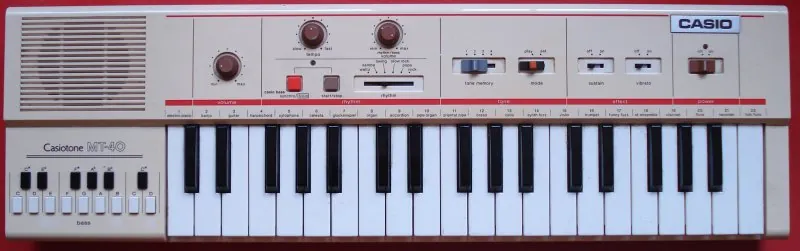
In late 1984, in Waterhouse, St Andrew, the musician Noel Davey and the singer Wayne Smith were trying out the preset sounds on a Casio MT-40 keyboard43. They took what they found to the producer Lloyd “King Jammy” James, who turned it into Wayne Smith’s 1985 single3.
GRAMMY.com calls it reggae’s first fully digital riddim, and estimates there are more than 450 reggae versions of it3. Other artists rushed to record on it, among them Tenor Saw with “Pumpkin Belly”4. King Jammy summed it up for the Observer: “That was the riddim that computerised the reggae business.”4
Digital production went on to change the sound of dancehall itself2.
Riddim in dubstep
Search for riddim online and you will also find a style of dubstep, the electronic dance music. Its fans describe a bouncy, stripped-back sound, and they say the name was adopted from Jamaican dancehall culture5. One producer dates the term in dubstep to around 20125.
The two meanings are different. A dubstep riddim is a style of track. A Jamaican riddim is one particular backing track that many artists voice.
Riddim words to know
- Juggling: a selecta mixing riddims and tunes to keep the dance going.
- One drop: the reggae drum pattern that puts the weight on the third beat.
- Dubplate: a one-off recording made for a single sound system.
- Big tune: the song everyone wants to hear.
Read next: Jamaican music genres and dancehall lyrics explained.
Timeline
Common questions
-
What does riddim mean?
Riddim is the Jamaican way of saying rhythm. In music it means the instrumental backing track of a reggae or dancehall song, which many different artists can record their own songs over.
-
Is a riddim the same as a beat?
It is a beat, but in Jamaica it is made to be shared. One riddim carries songs by many artists, each with their own lyrics and melody over the same music.
-
What was the first digital riddim?
The Sleng Teng riddim, built on a Casio MT-40 keyboard in late 1984 and released by King Jammy in 1985, is described by GRAMMY.com as reggae's first fully digital riddim.
-
What is riddim in dubstep?
A style of dubstep known for bouncy, stripped-back tracks. Its fans say the name was taken from Jamaican dancehall, where a riddim is a backing track.
Sources
- Rock Steady Jamaica Information Service
- The Evolution of Music in Kingston, Jamaica African Caribbean Institute of Jamaica / Jamaica Memory Bank, Institute of Jamaica
- Why 1985 Was A Landmark Year For Reggae: From The GRAMMYs To Sleng Teng GRAMMY.com (Simon Coates, September 4, 2025)
- How Sleng Teng changed the game Jamaica Observer (July 13, 2022)
- How to Talk to Your Kids About Riddim Insomniac (Chris Muniz, October 25, 2017)