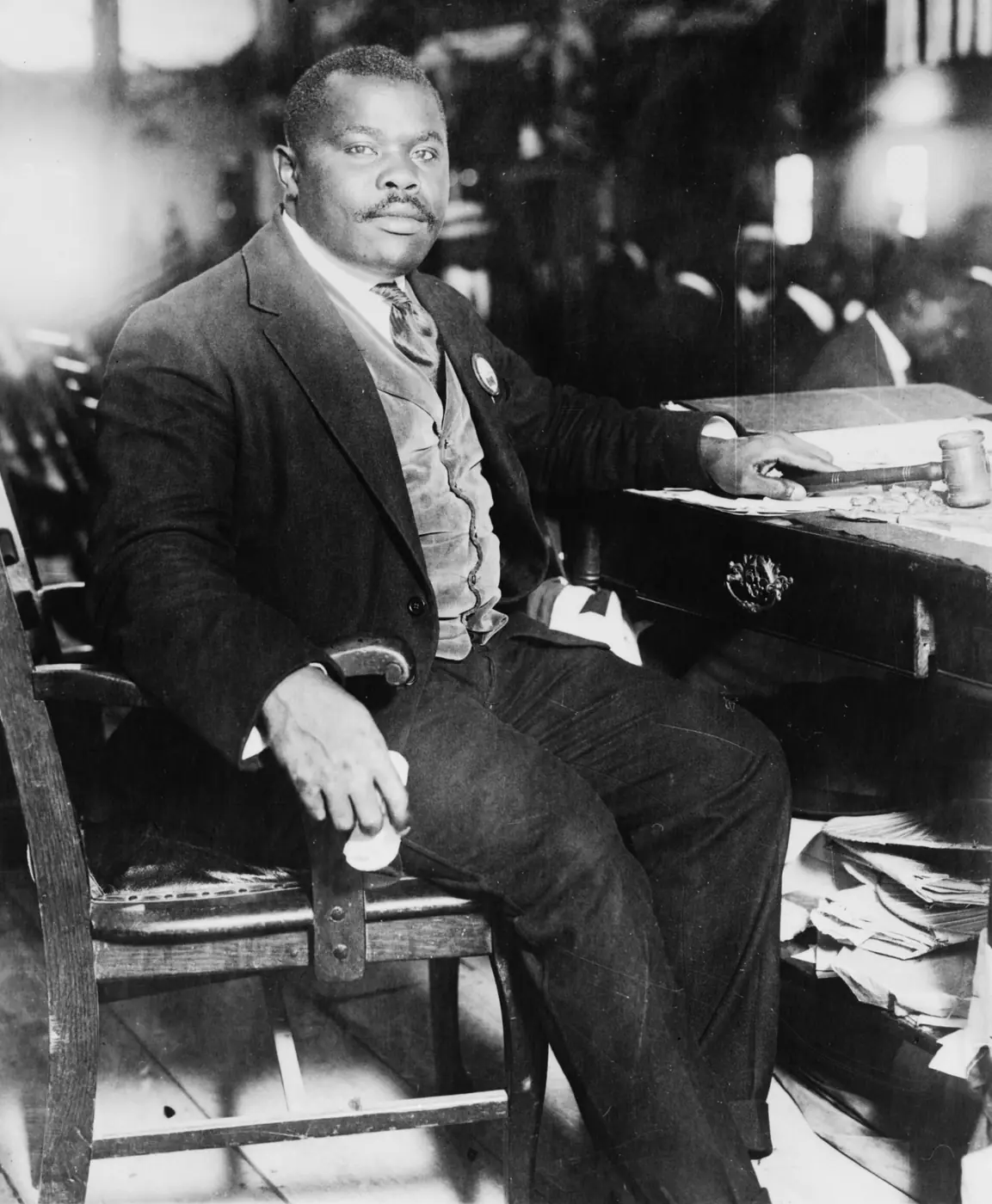

In brief
- Marcus Garvey was born in St Ann's Bay in 1887 and started the Universal Negro Improvement Association in Jamaica in 1914.
- He took his message to the United States in 1916, was imprisoned and deported, and came back to Jamaica in 1927 to found the People's Political Party.
- He died in England in 1940. His body was brought home in 1964 and lies in National Heroes Park, Kingston.
Who Marcus Garvey was
Marcus Mosiah Garvey was born in St Ann’s Bay, St Ann, on August 17, 1887. As a young man he moved to Kingston, worked as a printer and published a paper called The Watchman1.
In 1914 he started the Universal Negro Improvement Association in Jamaica1. The government’s list of heroes names him as its founder2.
Building the movement
In 1916 Garvey went to the United States, where he preached what his government biography calls his doctrine of freedom to oppressed Black people1. US officials disapproved of his work. He was imprisoned and then deported1.
At home, the association’s rules required every branch to have a Liberty Hall as its headquarters. In 1923 the Kingston branch bought a two-storey building at 76 King Street for £800. The Jamaica National Heritage Trust calls it the first meeting hall in Jamaica fully owned and operated by Black people3. It is now a museum about Garvey.
The movement’s businesses later failed, among them the Black Star Line shipping company, and the Kingston hall was sold in the 1930s3.
Back in Jamaica
Garvey returned to Jamaica in 1927 and kept working in politics. In 1929 he formed the People’s Political Party. He did not win a seat in national elections, but he did win one on the Kingston and St Andrew Corporation1.
He later left Jamaica for England, where he died on June 10, 19402.
Coming home
In 1964 Garvey’s body was brought back to Jamaica and buried in National Heroes Park in Kingston1. His grave is marked by a black star-shaped monument4.
How Jamaica honours him
Marcus Garvey was conferred with the Order of National Hero in 1969, under the National Honours and Awards Act1. Liberty Hall, restored and reopened in 2003, holds the Garvey Multimedia Museum and a research library on his life and work3. The dictionary has its own short entry on Marcus Garvey, written for anyone meeting his name in a song or a conversation.
Jamaicans remember the heroes each October on National Heroes Day.
What the honour means
The Order of National Hero can go to anyone born in Jamaica, or who was a Jamaican citizen at the time of their death, who gave the country “service of a most distinguished nature”. A National Hero is styled The Right Excellent, and the order’s motto is “He built a city which hath foundations”2.
Timeline
- August 17, 1887 Born in St Ann's Bay, St Ann 1
- 1914 Starts the Universal Negro Improvement Association in Jamaica 1
- 1916 Goes to the United States 1
- 1923 The association's Kingston branch buys Liberty Hall 3
- 1927 Returns to Jamaica after imprisonment and deportation 1
- 1929 Forms the People's Political Party 1
- June 10, 1940 Dies in England 2
- 1964 His body is brought home and buried in National Heroes Park 1
- 1969 Order of National Hero conferred 1
Further reading
Garvey Research Reference Library
Institute of Jamaica · Liberty Hall, Kingston
A reference library on Marcus Garvey and his movement, inside the building the Kingston branch of his association bought in 1923.
Good for:Researchers, students and readers who want to go past the summary.
National Heroes
Jamaica Information Service · Government of Jamaica
The government's own short biography of each of the seven National Heroes, with dates. It is the record our hero pages start from.
Good for:Students and anyone checking a date or a name.
Sources
- Marcus Mosiah Garvey Jamaica Information Service
- Order of National Hero Jamaica Information Service
- Liberty Hall Jamaica National Heritage Trust
- The ground where our heroes rest The Gleaner (Dr Lorenzo Gordon), August 9, 2026